
The syllabus for an ECG technician course typically focuses on providing a comprehensive understanding of the heart's anatomy and physiology, the principles of electrocardiography, operating ECG equipment, and interpreting ECG results.
Here's a breakdown of the key topics generally covered:
1. Fundamentals
Cardiovascular anatomy and physiology: In-depth study of the heart's structure, function, electrical conduction system, and its relation to other body systems.
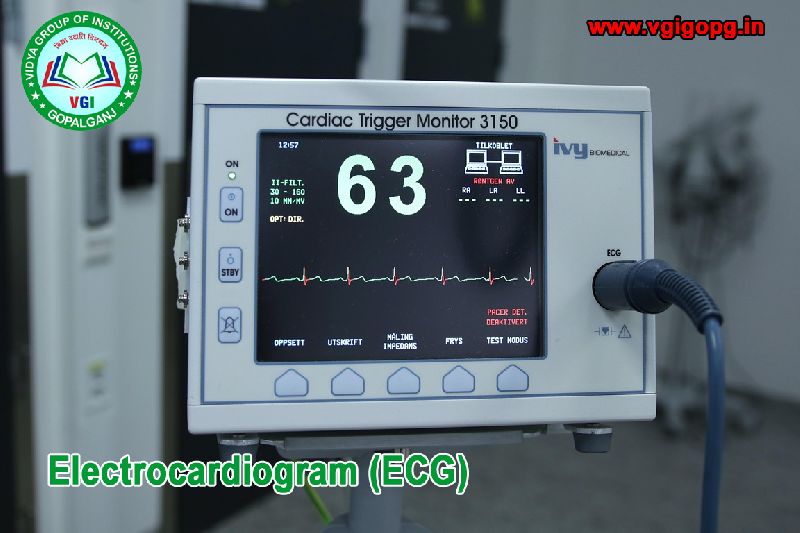
Basic principles of electrocardiography: Understanding how ECG machines work, electrode placement, and the generation of ECG waveforms.
Medical terminology: Familiarity with terms related to cardiovascular health and ECG interpretation.
2. ECG recording and analysis
ECG equipment operation and maintenance: Training on the proper use of ECG machines, troubleshooting common problems, and ensuring quality control.
Patient care and communication: Learning to effectively communicate with patients, ensure their comfort during the procedure, and address any concerns.
Normal ECG patterns: Learning to identify the characteristics of a normal ECG tracing, including heart rate, rhythm, intervals, and waveforms.
Interpretation of ECG results: Developing the skills to recognize and interpret a range of ECG abnormalities, including arrhythmias, conduction disorders, and myocardial infarction.
Cardiac monitoring and stress testing: Understanding the procedures and interpretation of Holter monitoring and exercise stress tests.
3. Patient safety and ethics
Safety procedures: Understanding and adhering to safety protocols, including infection control practices.
Ethical and legal considerations: Awareness of ethical aspects, patient privacy (HIPAA regulations), and professional responsibilities.
4. Practical training
Hands-on experience: Practical sessions on ECG recording on various patients (pediatric/adults), Holter/stress ECG monitoring, and assisting in temporary/permanent pacemaker procedures.
Computer skills: Basic computer literacy for tasks like data entry and report generation.
Important considerations
Course variations: The specific syllabus may vary slightly depending on the institution and the type of program (e.g., certificate vs. diploma).
Certification: Certification requirements vary by location, so researching your local regulations is crucial.
This comprehensive curriculum ensures that aspiring ECG technicians are welll-equipped to assist physicians in diagnosing and managing a wide range of heart conditions.
To become an ECG Technician in Bihar, you generally need to meet the following criteria:
1. Educational qualifications
10+2 with Science stream: Most institutions and recruitment drives require candidates to have completed their 10+2 (or equivalent) with Physics, Chemistry, and Biology as core subjects.
Minimum Marks: Some institutions might specify a minimum percentage (e.g., 45% or 50%) in the 12th board exam for eligibility.
Diploma or Bachelor's Degree: You should possess either a Diploma in ECG Technician or a Bachelor of ECG Technician Course from a recognized institution approved by the Central or State Government or AICTE.
2. Age limit
Minimum Age: The minimum age for applying to ECG technician programs is generally around 17 or 18 years.
Maximum Age: The maximum age limit can vary depending on the category and specific recruitment drive. For example, it might be 35 years for direct recruitment or potentially higher for reserved categories (up to 40 or 42 years).
3. Experience (for certain recruitments)
Work Experience: While not always mandatory for entry-level positions, relevant work experience can be beneficial for securing employment and sometimes contributes to the selection process.
For instance, in some recruitment drives for ECG Technicians in Bihar, candidates with work experience in government and non-government hospitals may receive additional marks (e.g., 5 marks for each year of experience, up to 5 years).
Important points
Institution/Recruitment Specifics: The precise eligibility criteria, including minimum marks and age limits, can vary depending on the specific institution offering the ECG course or the recruitment process you are applying for.
Official Notifications: It is crucial to refer to the official notification or website of the institution or recruitment drive you are interested in for the most accurate and up-to-date eligibility requirements.